Problem
Battery material screening is expensive when candidates are evaluated manually or without uncertainty-aware ranking.
AI-powered cathode material screening platform using graph neural networks for predicting battery material properties.
Measured from GitHub public repository data on May 31, 2026.
Battery material screening is expensive when candidates are evaluated manually or without uncertainty-aware ranking.
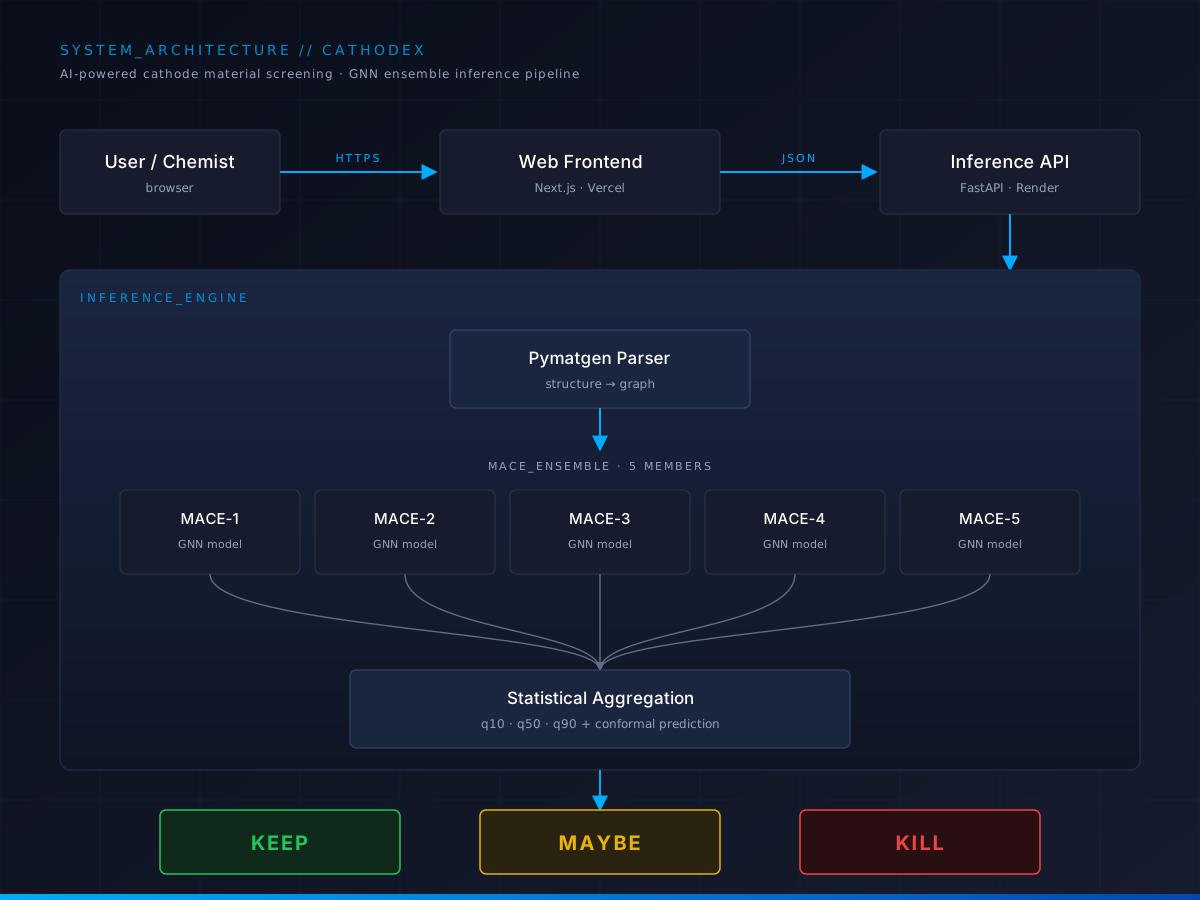
A web UI submits material structures to a FastAPI inference layer backed by PyTorch graph models and ensemble-style scoring.
Parsing, inference, and presentation are separated so untrusted input can be validated before reaching model execution and user-facing results.
Researchers get a faster candidate-screening workflow with ranked outputs and clearer confidence signals.
Built using PyTorch and Graph Neural Networks (GNNs) to model the atomic structure of cathode materials. It leverages high-throughput screening algorithms to predict key battery properties such as energy density and stability.
Accelerating the future of energy storage. CathodeX reduces the time and cost of battery material discovery by orders of magnitude, empowering researchers to find the next generation of sustainable energy solutions.